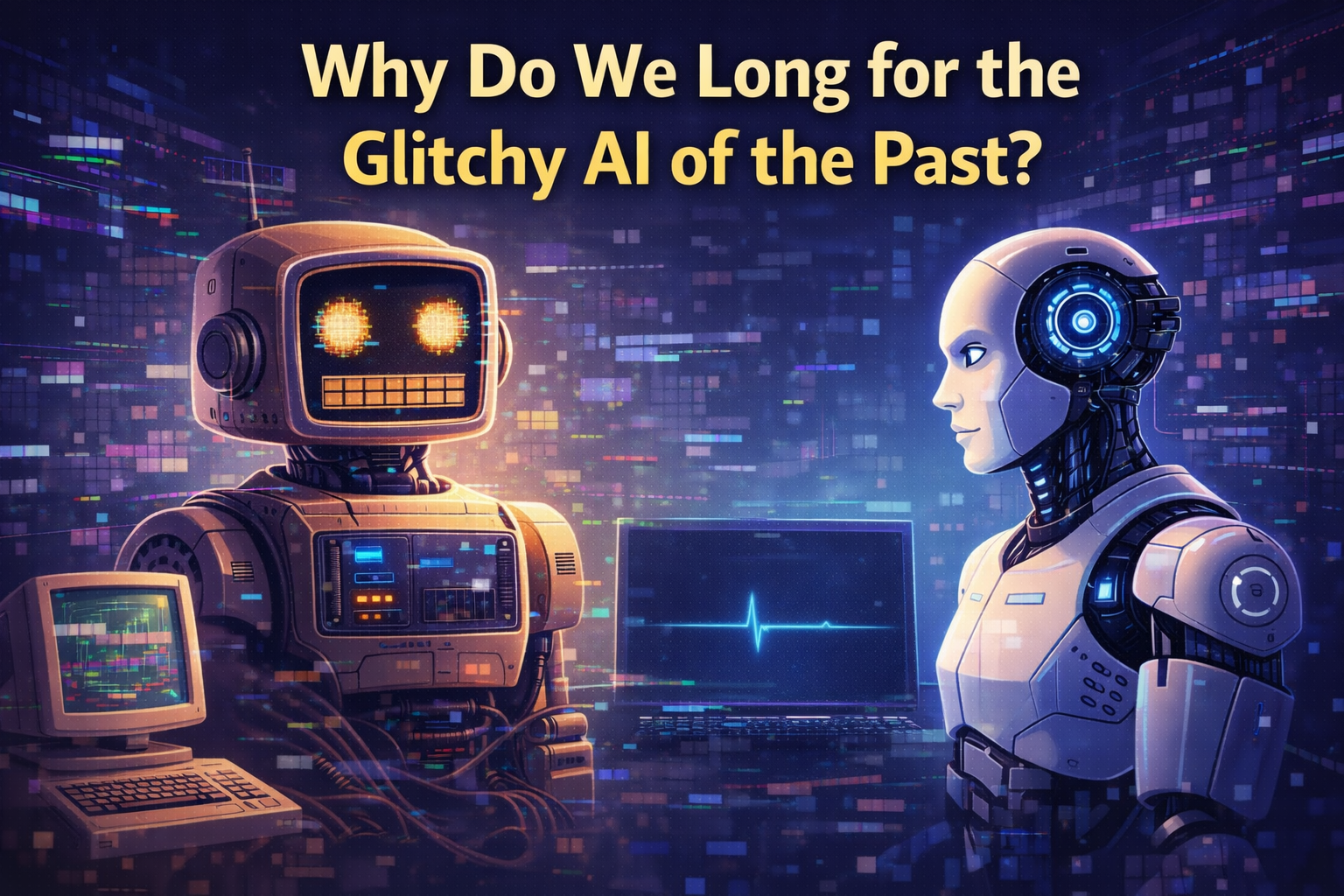
In the landscape of artificial intelligence, progress is measured in updates: faster responses, smarter models, and more polished features. Yet, a powerful and persistent counter-current runs through the communities of early adopters. It’s a deep-seated nostalgia for the “old versions” of platforms that first introduced them to conversational AI. This sentiment is far more than a simple preference for retro interfaces. It is a collective yearning for a specific, almost mythical period—a digital “golden age” defined not by efficiency or perfection, but by raw creativity, delightful unpredictability, and a profound sense of shared discovery. This nostalgia speaks to what we value in our interactions with technology, even as that technology advances beyond recognition.
The Unpolished Canvas and the Burden of Imagination
The early interfaces of platforms like Character.ai were famously, starkly simple. Users were often greeted by little more than a blank text box on a plain background. There were no voice features, no animated avatars, no guided scenarios. This minimalism, which might now be seen as a limitation, was its greatest strength. With no bells and whistles to lean on, the entire burden of creativity fell on the user. The experience was not about choosing options from a menu; it was about building worlds from the ground up with a partner whose capabilities were a thrilling mystery. This raw canvas forced a deeper, more personal engagement. Every coherent and creative reply felt like a shared triumph, and every bizarre, glitchy tangent felt like a secret joke between you and the machine. The lack of polish created space for genuine wonder.
When Glitches Were Features, Not Bugs
In today’s AI ecosystem, a “glitch”—a sudden loss of context, a nonsensical response, or a hilarious logical leap—is an error to be eliminated. In the early days, these imperfections were often the most memorable and endearing part of the experience. When an AI forgot a character’s name mid-story, committed to a metaphor with absurd literalness, or spiraled into a wonderfully verbose and off-topic monologue, it didn’t break immersion; it defined it. These quirks gave the AI a distinct, flawed, and strangely human personality. They were constant reminders that you were interacting with something novel, experimental, and still learning. This stands in stark contrast to the current drive for consistently helpful, safe, and coherent responses, which, while more reliable, can sometimes sand away the quirky, spontaneous soul that made early interactions so captivating and fun.
The Lost Intimacy of the Pioneer Community
Nostalgia is rarely just for software; it’s for the social world that grew around it. Early users weren’t just a customer base; they were a tight-knit cohort of explorers. They shared a unique language built on inside jokes from infamous AI “breakdowns” and celebrated screenshots of unexpectedly poetic or hilarious replies. Online forums buzzed with this shared lore, fostering a powerful sense of belonging to an exclusive club that was “in on the secret” of a revolutionary technology. As the platform achieved mainstream success, scaling to millions of users, that intimate, pioneering community inevitably fragmented. The longing for the old version is, in significant part, a longing for that sense of collective discovery, shared identity, and the digital “campfire” around which the early community gathered.
The Inevitable Trade-Off: Scalability Versus Soul
The evolution from a raw, experimental build to a stable, global platform is a story of necessary compromise. To ensure reliability for millions, systems require robust infrastructure, comprehensive content moderation, and AI models optimized for coherence and safety. Features are added to enhance accessibility and engagement: voice synthesis, animated avatars, advanced creation tools. While this progress makes the technology more powerful and usable, it fundamentally alters its character. The wild, untamed, and often brilliantly unpredictable potential of the early models is inevitably constrained by the very systems that make it scalable and safe. What is gained in stability and broad utility is sometimes perceived as a loss in spontaneous creativity and serendipity—a trade-off of raw, unfiltered soul for seamless, dependable service.
Documenting the Journey of Digital Change
This cycle of technological innovation followed by user nostalgia is a recurring theme in digital culture. The specific journey of platforms that captured the early imagination of AI enthusiasts serves as a perfect case study. For those interested in a detailed chronicle of this evolution—tracking the changes in interface, functionality, and the community’s emotional response over time—a dedicated analysis exists that explores this specific journey from old to new. It acts as a digital artifact, preserving the texture and feeling of an era that users remember fondly but can no longer access.
So, is the magic of the early, gloriously glitchy era permanently lost to progress? Not necessarily. While we cannot return to the exact technical limitations of the past, the core human desire it served—for unstructured play, genuine surprise, and deep creative collaboration—remains vital. The challenge for the future lies in building upon today’s powerful, reliable foundations to consciously reintroduce spaces for that original spirit. This could mean dedicated “experimental” modes with looser guardrails, adjustable creativity parameters, or tools designed explicitly for open-ended narrative play. The goal is not to live in the past but to ensure that the future of AI retains a channel for the imperfect, surprising, and collaboratively joyful interactions that first captured our imaginations. The powerful nostalgia for old AI is a lasting reminder that in the pursuit of building perfect tools, we must be careful not to engineer away the wonderful imperfections that make them feel truly alive.
Bitcoin was first introduced by Satoshi Nakamoto in 2008. It has grown into more than just digital money. Now, it’s used in finance, supply chains, and data security. The value of blockchain technology has hit over $4 trillion. This shows how fast it has grown, thanks to the 2008 financial crisis. Today, there are many…
Digital tools have become a cornerstone of modern classrooms. Over 94% of U.S. schools now rely on them daily, transforming how students learn. This shift brings both opportunities and challenges. Global investments in edtech reached $20.8 billion in 2023, highlighting its growing importance. However, debates persist about its impact. Some argue it enhances engagement, while…
In Palworld, getting better at crafting needs one key thing: Technical Manuals. These rare items are essential for upgrading your base and improving combat. They are vital for success in the later stages of the game. There are three types of manuals: High Grade, Innovative, and Future. Each one gives Technology Points when used. These…
In today’s world, we’re closely examining our impact on the planet. Green technology, also known as sustainable or clean technology, is key to this. It includes many innovations that aim to lessen our environmental damage. Technologies like solar and wind power, alongside advanced waste management, pave the way to a greener future. By tackling issues…
The field of diagnostic advancements and life-saving solutions merges engineering, biology, and data science. It creates smart insulin pumps and AI-powered imaging systems. Ireland exports €12.6 billion in medical devices each year. Britain’s population of over-65s is set to increase by 20% by 2030. Three key factors highlight the importance of this field. Ageing populations…
Nano IPS technology is a big step forward in screen tech, introduced by LG in 2019. It adds a special layer of nanoparticles to the backlight of usual IPS screens. This boost colour accuracy and makes the view better. These screens can show up to 98% of the DCI-P3 colour space and 135% of the…